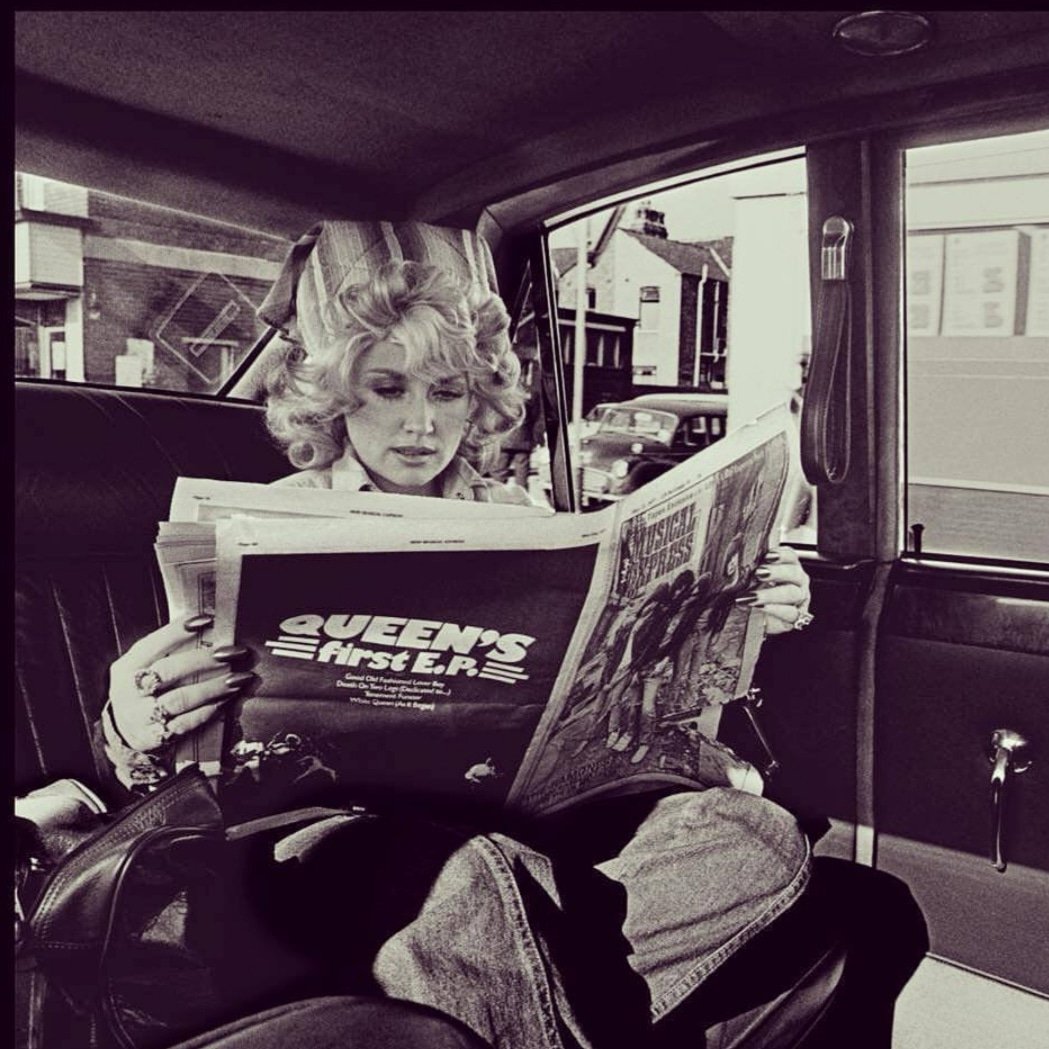
Liverpool, 27. maj 1977: The Ramones er på forsiden af New Musical Express da The Smoky Mountain Songbird tager en cab i Liverpool til aftenens koncert på Empire Theatre.

Liverpool, 27. maj 1977: The Ramones er på forsiden af New Musical Express da The Smoky Mountain Songbird tager en cab i Liverpool til aftenens koncert på Empire Theatre.
Du skal være logget ind for at skrive en kommentar.
Det billede affødte en tanke, så jeg spurgte straks Twitter’s AI:
How would it have worked out in 1977 with Dolly Parton as lead singer in The Ramones?
“It would have been glorious, chaotic, and almost certainly a short-lived cultural explosion that left both punk and country forever altered.In 1977 the Ramones were pure New York punk: leather jackets, buzzsaw guitars, 1-2-3-4 countdowns, and Joey Ramone’s deadpan, adenoidal delivery of two-minute songs about sniffing glue, teenage lobotomy, and hanging out. Dolly Parton that same year was already a major country star with a crystalline voice, sharp songwriting, big blonde hair, and a stage presence that mixed glamour, humor, and steel. Dropping her into the lead-singer slot is one of those alternate-universe ideas that shouldn’t work on paper yet somehow feels inevitable once you start imagining it.
The sound:
Dolly’s pure, powerful, vibrato-rich voice would have turned the Ramones’ minimalism into something stranger and more melodic. Imagine “Blitzkrieg Bop” with her soaring over the riff instead of Joey’s monotone, or “Sheena Is a Punk Rocker” delivered with country phrasing and perfect pitch. The band’s speed and simplicity would still be there—Johnny’s downstroked chords, Dee Dee’s bass, Tommy’s (or Marky’s) drums—but the melodies would suddenly have real hooks and emotional range. Songs like “I Wanna Be Your Boyfriend” or “Oh Oh I Love Her So” would gain an almost tragicomic sweetness. Newer material written around her strengths might have mixed bubblegum punk with Appalachian storytelling: three-chord thrashers about trailer-park heartbreak, rhinestone-studded rebellion, or working-class dreams.It wouldn’t have been pure Ramones anymore, and it wouldn’t have been pure Dolly.
It would have been a hybrid—proto-cowpunk or glam-country-punk—years ahead of later acts that mixed those worlds.
The look and the scene:
Picture CBGB in 1977: the usual crowd of skinny kids in ripped jeans and leather, and then Dolly walks out in a sparkling jumpsuit or a modified cowboy-punk outfit, big hair intact. The visual clash alone would have been legendary. Some hardcore punks would have booed or walked out; others would have been mesmerized. The media would have lost its mind—Rolling Stone covers, late-night TV appearances, tabloid headlines about “Dolly Goes Punk.”
Commercially it could have been huge. The Ramones never cracked the mainstream in a big way in their early years; Dolly already had the audience and the showbiz instincts. A few radio-friendly singles with her voice on top of that wall of sound might have gotten actual airplay, pushing the band further into the pop consciousness while giving Dolly a rebellious edge that fit her independent streak.
+ + +
Musically it would have been uneven in the best way: some tracks transcendent, some gloriously awkward. Culturally it would have been pure 1970s American excess—the kind of collision that only that decade could produce. In the end it probably wouldn’t have lasted more than an album or two, but the stories, the photos, and the one or two perfect songs would still be talked about today.Pure alternate-history gold.”