
Q: It seems like when you first came to New York, you were really able to engage with this entire community of young artists, and my question is: From the way this city has changed, and the whole nature of the way we comunicate with people has changed, do you still think it’s possible for a young artist to kind of come to this city and find that community?
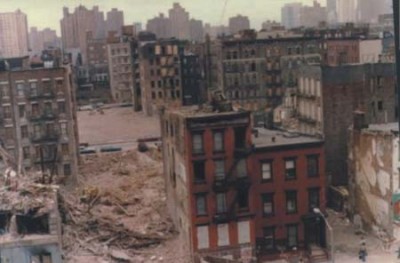
Well, when I first came to New York City I didn’t have any money, I didn’t know anybody. I did know a few people at Pratt Institute, which is a readymade situation. I mean, obviously a school, a college, a place of higher learning is a readymade situation for a community, but I didn’t go to school. I met people and we did develop communities. It’s much harder in New York City, almost impossible, to do what we did back then because of how it’s changed economically. In the sixties New York City was down and out, it was a bankrupt city. You know, there was often garbage strikes, you could get an apartment for 60 $ a month in the East Village. You know, you could build a whole community of transvestites, or a whole community of actors and poets and singers, or a political community. It was much easier because we could get shitty jobs and get a shitty little apartment without a bathroom, but we were alive and we were together. And New York has closed itself off to the young and the struggling, but there is always other cities, you know….I don’t know…Detroit, Poughkeepsie, Newark, you know, you have to find the new place, because New York City has been taken away from you. It’s still a great city, but it has closed itself off from this, the poor and creative burgeoning society. So my advice is: Find a new city.
Patti Smith, 1. maj 2010, The Great Hall, Cooper Union, New York City