
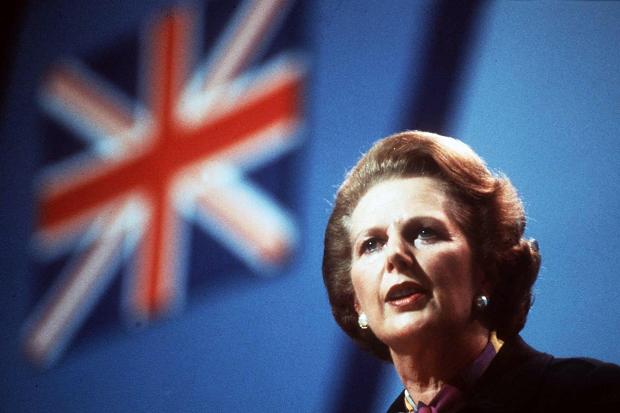
Thatcher is remembered as The Iron Lady only because she possessed completely negative traits such as persistent stubbornness and a determined refusal to listen to others.
Every move she made was charged by negativity; she destroyed the British manufacturing industry, she hated the miners, she hated the arts, she hated the Irish Freedom Fighters and allowed them to die, she hated the English poor and did nothing at all to help them, she hated Greenpeace and environmental protectionists, she was the only European political leader who opposed a ban on the Ivory Trade, she had no wit and no warmth and even her own Cabinet booted her out.
She gave the order to blow up The Belgrano even though it was outside of the Malvinas Exclusion Zone – and was sailing AWAY from the islands. When the young Argentinean boys aboard The Belgrano had suffered a most appalling and unjust death, Thatcher gave the thumbs up sign for the British press. Iron? No. Barbaric? Yes.
She hated feminists even though it was largely due to the progression of the women’s movement that the British people allowed themselves to accept that a Prime Minister could actually be female. But because of Thatcher, there will never again be another woman in power in British politics, and rather than opening that particular door for other women, she closed it.
Thatcher will only be fondly remembered by sentimentalists who did not suffer under her leadership, but the majority of British working people have forgotten her already, and the people of Argentina will be celebrating her death.
As a matter of recorded fact, Thatcher was a terror without an atom of humanity.
Jeg er for ung til at huske 80’ernes Storbritannien, men jeg synes resultaterne af Thatcherårene er mere blandede end det Morrissey ligger op til. På den ene side er ting som Section 28, håndteringen af Hillsborough og støtten til apartheid er utilgivelige. På den anden side var hun på den rigtige side af historien mht. Falklandsøerne og Sovietunionen. Og økonomisk forbedrede tingene sig rimelig markant http://krugman.blogs.nytimes.com/2013/04/08/did-thatcher-turn-britain-around/
Den øgede velstand ikke blev delt ligeligt kom den stadig alle til gode http://lanekenworthy.net/2009/06/01/did-blair-and-brown-fail-on-inequality/
I betragtning af det land hun overtog (kæmpe underskud, IMF-lån, strejker, Winter of Discontent osv.) er det en rimelig stor forbedring. Der kan ikke være mange i dag der har lyst til at se arbejderne tilbage i minerne så de kan grave dyre forurenende kul indtil de dør alt for tidligt? Eller mange der har lyst til at gennationalisere bilfabrikanter og stålværker?
“Det var intet tilfælde at poll tax blev indført i Skotland først.”
Det var rimelig tilfældigt faktisk http://blogs.spectator.co.uk/alex-massie/2013/04/margaret-thatcher-and-scotland-a-story-of-mutual-incomprehension/
Det er meget præcist opsummeret. Skulle jeg tilføje noget, ville det være at nævne Thatchers foragt for de ikke-engelske dele af Storbritannien, dvs. også Skotland og Wales. Det var intet tilfælde at poll tax blev indført i Skotland først.